Trauma, PTSD and Memory Loss: Why Asylum Testimony Can Be Inconsistent – and How a Psychiatric Evaluation Protects Credibility
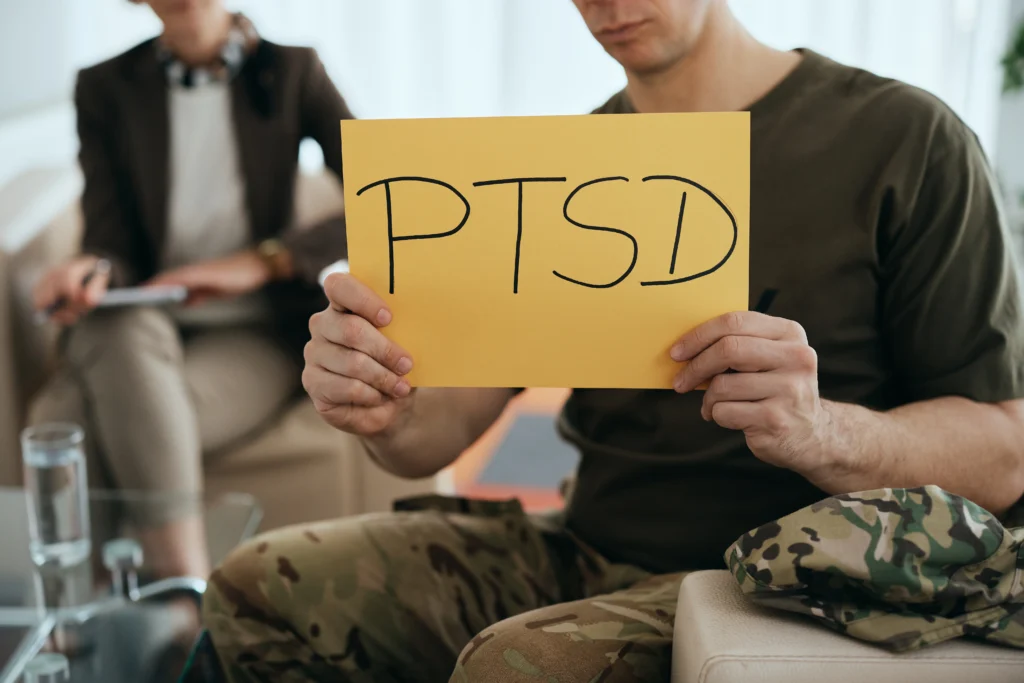
Quick answer: Trauma messes with memory. Somebody with PTSD can tell you the color of the shirt the man wore and have no idea whether it was March or May, or how many men there were, or what came first. That’s not lying, and the science on it is pretty settled. The risk is that an asylum officer or a judge sees the gaps and writes them up as an adverse credibility finding. A psychiatric evaluation puts an explanation on the record first.
Here’s a scene that plays out all the time. A woman tells her lawyer she was detained “in March.” In her written declaration it’s April. At her asylum interview she says it was “after the rains,” and the officer asks which month that was, and she freezes. Three versions of one date. Honestly, the date was never the thing she held onto. The smell of that room, yes. The sound the door made. But the officer is sitting there with a file and three different months in it.
Some version of her comes up in our work all the time. So let’s talk about trauma and memory, about asylum credibility, and about what you can actually do before the interview.
Myth: “If It Really Happened, You’d Remember It Clearly”
It sounds reasonable. It’s wrong.
Ordinary memories get filed away with a time stamp and a sequence attached. First this, then that, on a Tuesday. Terror wrecks that filing system. Your body is trying to survive the next ten seconds and couldn’t care less what day it is. So you keep fragments, a face, a noise, a cold floor under your knees, and lose the order. A traumatic memory ends up weirdly sharp in spots and full of holes everywhere else. Sometimes whole hours just aren’t there.
People ask us, does trauma affect memory, like really? It’s literally in the DSM-5. One of the listed PTSD symptoms is not being able to remember an important part of the traumatic event (we call that dissociative amnesia). So PTSD memory loss isn’t some excuse lawyers dreamed up. It’s in the book clinicians diagnose from. A person who can’t remember part of what happened may be showing a symptom, not covering something up.
Myth: “Inconsistencies Mean the Story Was Made Up”
Researchers have tested this directly. A well-known 2002 study in the BMJ by Herlihy, Scragg and Turner interviewed refugees from Kosovo and Bosnia twice, months apart, and compared the two accounts. Discrepancies were common. Among people with high PTSD symptoms, the longer the gap between interviews, the more the details shifted. And the details that changed most were the peripheral ones, the stuff a person wouldn’t think was central to what happened to them.
Think about what that means for an asylum case. The process takes years now. Someone gives a credible fear interview at the border, writes an asylum declaration a year later, and sits for an asylum interview two or three years after that. With PTSD, drift in the small details isn’t just possible. It’s expected.
How Trauma Memory Loss Shows Up in an Asylum Interview
In our evaluations, it tends to look like some mix of these:
- Dates and times that move around between the declaration and the interview
- Events told in a different order each time
- Numbers that don’t match. “Three soldiers,” then “four or five.”
- Going quiet for a long time, or just blank, mid-question
- Telling the worst part with no visible emotion, which officers sometimes misread as coldness
- Remembering something new, months later, that “should” have come up the first time
Every one of those can be a symptom. Every one of them can also end up in a denial letter, which is the cruel part of PTSD asylum cases.
How Credibility Is Judged Under the REAL ID Act
This is where it gets serious. The REAL ID Act came in 2005, and after it, an officer or judge can hang an adverse credibility finding on pretty much any inconsistency, “without regard to whether” it goes to the heart of the claim. So yes, the wrong month can sink you even if everything else checks out. Demeanor counts too. Candor. Whether the story sounds plausible to them. Whether it matches what’s known about the country.
But there’s a phrase in the same law, “totality of the circumstances,” and that’s where you get in. PTSD is a circumstance. Put expert evidence in the file about why this particular person remembers the way she does, and they’re supposed to deal with it.
Asylum Interview vs. Reasonable Fear Interview
| Asylum interview | Credible or reasonable fear interview | |
| Who does it | USCIS asylum officer | USCIS asylum officer, often by phone |
| When | Months or years after filing Form I-589 | Shortly after arrival or after a prior removal order is reinstated |
| Typical setting | Asylum office, with an interpreter | Detention, sometimes days after a traumatic journey |
| What goes wrong with memory | Years have passed. PTSD. Tired of telling it. | No sleep, scared, no lawyer yet, still in shock |
The reasonable fear interview is especially rough. Someone may be talking about rape for the first time in their life, on a phone line, through an interpreter they can’t see. Then whatever they said gets compared, word for word, with what they say years later in court.
How to Prove PTSD for an Asylum Case
A letter saying “my client has PTSD” isn’t proof. What holds up is a forensic evaluation that shows its work. Ours generally includes:
- A long clinical interview. Two to four hours, sometimes split over two sessions, with a professional interpreter. We don’t rush. Push a trauma survivor for details in the first hour and you mostly get a worse story, not a better one.
- Testing. PTSD, depression, anxiety scales, the validated ones, and we pick versions that make sense in her language and culture.
- Mapping the gaps. Where exactly does her memory drop out? Is that the pattern trauma usually leaves, or something else? Any dissociation?
- Checking for exaggeration. We look at whether symptoms are being overstated and we write down what we found either way. Funny thing is, that’s what judges trust most.
- Fit. Do her symptoms match what she says was done to her?
The Istanbul Protocol
Torture claims are their own category. There’s a UN manual for documenting torture called the Istanbul Protocol (the newest edition came out in 2022), and we follow it in those cases. It gives a common scale for saying how well the psychological findings line up with the story. Judges who hear a lot of asylum cases have seen it plenty. They know what the terms mean, which saves everybody time.
Asylum Interview Tips If You Have PTSD
None of this is a substitute for your lawyer’s advice. But here’s what tends to help:
- Do the evaluation before the interview. After a denial you’re just chasing it.
- “I don’t remember” is a real answer. People guess a date because the silence feels awful, and boom, new inconsistency.
- “I’m not sure which month” is fine too. Then say what you do know. It was hot. It was right before the election. Whatever anchors it.
- Need a break? Ask. Nobody gets extra points for pushing through a panic attack.
- Read your declaration again with your lawyer. Mistakes in it should be corrected in writing, before the interview, not explained on the spot.
- Tell your lawyer about the nightmares and the blanking out. Even if it’s embarrassing. Especially then.
What If You Already Got an Adverse Credibility Finding?
It isn’t always the end. If the asylum office referred the case to immigration court, the judge hears the whole thing fresh, and a psychiatric evaluation can go into the record there. On appeal, the question becomes whether the judge properly considered the evidence about trauma. Your attorney will know which door is still open.
FAQ
Can PTSD really cause memory loss?
Yep. Not remembering key pieces of what happened is a recognized PTSD symptom. Lots of people also lose their keys constantly, forget appointments, can’t focus on a page.
So the evaluation makes the inconsistencies go away?
No, what you said is what you said. The report gives the officer a reason for the differences, and a fair officer will factor that in.
My therapist already wrote a letter. Isn’t that enough?
For a credibility problem, probably not by itself. A forensic report with testing carries more weight. Keep the therapist’s letter though, it helps next to the evaluation.
When is the best time to get evaluated?
A couple of months before the asylum interview or the court hearing, if you can. That way your lawyer has time to actually use what we find.
Can the evaluation be done remotely?
Yes, most of ours are on secure video now, interpreter on the line.
Get a Trauma-Informed Psychiatric Evaluation for Your Asylum Case
At Nursing The Mind, psychiatric nurse practitioner Inna Revutsky conducts forensic evaluations for asylum seekers whose cases turn on credibility, memory and trauma. Interviews go at a pace that lets people actually talk, and reports are written for the officer or judge who has to read them. Virtual immigration evaluations are available nationwide through confidential telehealth.
Call (862) 308-8344 to schedule a confidential consultation.
This article is for general information only and is not legal or medical advice. A psychiatric evaluation does not guarantee approval of any immigration application. Speak with an immigration attorney about your specific case.